



Water purifier filter cartridges need to be replaced regularly to maintain water quality and system performance. However, the replacement filter market also faces a common challenge: counterfeit and unauthorized filter cartridges.
Non-genuine filters may use different materials, offer inconsistent filtration performance or have a shorter service life. These products can affect the performance of the water purification system and potentially damage the reputation of the original brand.
To address this challenge, NFC technology provides an intelligent anti-counterfeiting solution by allowing the water purifier itself to authenticate the filter cartridge before operation.
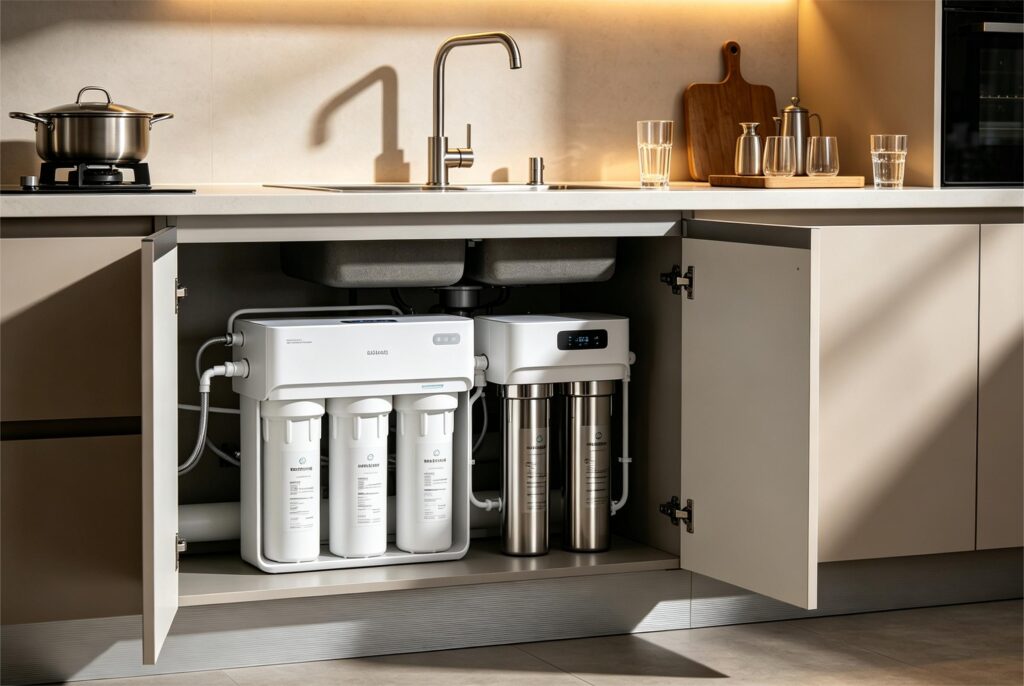
How Does NFC Authentication Work in a Water Purifier?
In this solution, an NFC reader is integrated into the water purifier, while an NFC label is embedded in or attached to each genuine filter cartridge.
Each NFC label contains encrypted data, providing a secure digital identity for the filter cartridge.
When a new filter cartridge is installed, the NFC reader automatically detects the NFC label and reads the encrypted data stored within it.
The water purifier then verifies whether the NFC label contains valid authentication information.
Only when the NFC label is successfully recognized and authenticated will the water purifier recognize the filter cartridge and allow the system to operate.
If the installed cartridge does not contain a valid NFC label, or if the encrypted data cannot be successfully verified, the water purifier can prevent the system from operating or display an error notification.
This creates a secure connection between the water purifier, the filter cartridge and the authentication system.
The Basic Structure of the NFC Anti-Counterfeiting System
A typical NFC-enabled water filter authentication solution consists of three main components.
1、NFC Label Integrated into the Filter Cartridge
- Each genuine filter cartridge is equipped with an NFC label containing encrypted authentication data.
- The encrypted data can be used by the water purifier to verify whether the installed filter cartridge is authorized.
- The NFC label can also store or be associated with product-related information, such as:
- Product model
- Filter type
- Serial number
- Production batch
- Manufacturing information
- Encrypted authentication data
- Filter lifecycle data
By assigning each filter cartridge secure authentication data, manufacturers can establish a reliable connection between the physical product and the water purification system.
2. NFC Reader Inside the Water Purifier
The water purifier is equipped with an NFC reader and antenna.
When the filter cartridge is installed, the NFC reader communicates with the NFC label at close range and reads the encrypted data.
The system then verifies the authentication information to determine whether the installed filter cartridge is genuine and authorized.
This provides an additional layer of protection compared with a simple identification system that only checks a visible code or basic serial number.
3. Authentication and Control System
After detecting the NFC label, the water purifier reads and verifies the encrypted authentication data according to predefined authentication rules.
If the authentication is successful, the system recognizes the filter cartridge as an authorized product and enables normal operation.
If authentication fails, the system can be programmed to:
- Prevent the water purifier from operating
- Display an error message
- Notify the user that the filter cartridge is unauthorized
- Record the authentication failure
- Request replacement with a genuine filter cartridge
A Simple Authentication Process
The authentication process can be summarized in four steps.
Step 1: Install the Filter Cartridge
The consumer installs a replacement filter cartridge into the water purifier.
Step 2: NFC Reader Detects the NFC Label
The NFC reader inside the water purifier detects and communicates with the NFC label integrated into the filter cartridge.
Step 3: Encrypted Data Authentication
The NFC reader reads the encrypted data stored in the NFC label.
The water purifier verifies the authentication information to determine whether the filter cartridge is genuine and authorized.
Step 4: Enable or Disable Operation
If the encrypted data is successfully verified, the water purifier recognizes the filter cartridge and allows normal operation.
If authentication fails, the system can restrict or prevent the water purifier from operating.

Why Use NFC Labels with Encrypted Data for Filter Cartridge Anti-Counterfeiting?
Stronger Anti-Counterfeiting Protection
Each genuine filter cartridge is equipped with an NFC label containing encrypted authentication data.
This makes it more difficult for unauthorized products to simply copy visible information, such as a printed serial number or QR code.
The water purifier can verify the authentication data before allowing the filter cartridge to be used.
Prevent Unauthorized Replacement Filters
The water purifier itself can automatically identify whether the installed filter cartridge is equipped with valid authentication data.
A counterfeit or unauthorized filter cartridge that cannot pass the authentication process can be prevented from operating with the system.
Automatic Authentication
The entire verification process can take place automatically when the filter cartridge is installed.
Consumers do not need to manually enter a serial number, scan a QR code or visit a verification website. The NFC reader inside the water purifier performs the authentication directly.
Protect Brand Reputation
Counterfeit or low-quality replacement filters can negatively affect water purification performance and customer experience.
By ensuring that only authenticated filter cartridges can be recognized by the water purifier, brands can better protect their products and reputation.
Support Smart Filter Management
Beyond anti-counterfeiting, the NFC label can support additional smart functions.
For example, the water purifier can identify the filter model, record installation information, track filter usage and provide replacement reminders.
This allows the NFC label to become part of a smarter and more connected water purification system.

Custom NFC Labels for Water Filter Cartridges
The design of an NFC label for a water purifier filter cartridge should consider several factors, including:
- Filter cartridge material
- Installation position
- Available space
- Reading distance
- Antenna design
- Moisture and environmental conditions
- Required security level
- Encryption and authentication requirements
Depending on the filter structure and available installation space, NFC labels can be customized in different sizes, shapes and antenna designs.
For applications requiring enhanced anti-counterfeiting protection, NFC labels can be designed with encrypted authentication data to support secure product verification.
NFC: A Secure Connection Between the Filter and Water Purifier
NFC technology transforms filter cartridge authentication from a traditional visual inspection process into an automatic device-level authentication system.
By integrating an NFC reader into the water purifier and an NFC label containing encrypted data into each genuine filter cartridge, manufacturers can establish a secure authentication process:
Genuine Filter Cartridge → NFC Label Detection → Encrypted Data Verification → Water Purifier Operation
Only filter cartridges equipped with a valid NFC label and successfully verified authentication data can be recognized and authorized by the system.
This solution helps water purifier manufacturers strengthen anti-counterfeiting protection, reduce the risk of unauthorized replacement filters and create a more intelligent product ecosystem.
With encrypted data stored in an NFC label, every genuine filter cartridge can carry secure authentication information—allowing the water purifier itself to verify the filter before operation.